Friday, November 20, 2020

Klansville USA

    Klansville USA was based on the great state of North Carolina. The state that I was born and raised in was nicknamed "Klansville". The KKK started around the same time as civil rights movements, such as the lunch counter sit ins. 

   The KKK was started after the civil war to prank the newly freed slaves. This was a disgusting racial hate group used to terrorize black people. It started out as small groups in the south, and it grew popularity from a film called The Birth of A Nation. This film increased the excitement around the group for less wealthy white people, and their recruitment number increased. They are most commonly known for the white hoods and cross burning. The North Carolina branch in the 1960s was leaded by Bob Jones, whose says he feels like he was made to be a Klan leader since his moms was pregnant with him during a KKK parade. Jones became the most prominent leader for the NC chapter and increased the number of members significantly.

Alabama newspaper editor calls on KKK to lynch Democrats - BBC NewsFBI — The FBI Versus the Klan, Part 1

 In The Birth of A Nation, black people were seen as inferior and as background characters. This helped fuel the racial fury of white people considering blacks were shown as useless in their films. The film was so well known that it was displayed at the White House to current president, Woodrow Wilson.

    Overall the KKK will forever be known as the most popular racially-motivated attack group in the U.S. and hopefully it will always be remembered for its negative actions.

Tuesday, November 17, 2020

Assassinations of Civil Rights Era

    The Civil Rights Era was full of influential people who were so devoted to making a change in their society. I am very grateful to say that there were people who were fearless enough to stand up for what they believed in no matter how much violence and anger was pushed against them.

     The worst part of it all is that their time will eventually come to an end, but what they leave behind is something truly remarkable. I will talk of the assassinations of the inspirations, Martin Luther King Jr., John F. Kennedy, and Malcolm X, who all left a legacy bigger than they could have imagined.

    Martin Luther King Jr went to Tennessee on the 3rd of April, 1968 with plans of helping sanitation workers in Memphis fight against the mistreatment of the black workers that following Monday. April 4th, as he was about to leave his motel to have dinner with Samuel Kyles, he decided to go talk to some members of the Southern Christian Leadership Conference, who were down in the parking lot. He steps out onto the balcony, of his room, and a shot is fired. This one shot hits King in his face and he falls to the ground. Nearby people rush him to the hospital, but he is declared dead an hour later. This day was a day of mourning for people all over America, as declared by President Lyndon B. Johnson. A police investigation led to the 99 years sentence of James Earl Ray in 1969. A lot of conspiracy arose around this case for Ray tried to say he was framed, and their was thoughts of a possible government interference. In the end Ray, died in jail on April 23rd, 1998, so the case was not ever 100% confirmed.

    King's death sparked numerous deaths, and led to a lot of property destruction, but most importantly it lit a fire in the butt of those who fought so hard alongside King. His time may have been done but this was just the beginning of his journey as a civil rights activist. He was such an inspiration to those to keep fighting for equality and to keep having a dream.

    President John F. Kennedy was riding around Texas to campaign for his second run for presidency. He started in San Antonio, continued to Fort Worth, and ended in Dallas. The president, his wife, and Governor Connally were all packed into a motorcade headed to the Trade Mart, which was where the president was supposed to give a speech at. The open top car turns into the Dealey Plaza and, suddenly, shots were fired. Kennedy had been struck in several places and the governor was shot in the back. The car sped off to the hospital but sadly it was too late for the president. His killer was decided to be Lee Harvey Oswald, and as he was being taken to jail, he was shot and killed by Jack Ruby.

    There was a lot of conspiracy surrounding his death too. Firstly, since President Kennedy was against any kind of racial inequality and was even close with MLK Jr. there seemed to be a hit put out on him. Many worried that a racist person was so upset that he supported black affairs that he was shot for this very reason. Another theory was that Oswald had an accomplice with him, who stood on top of a nearby hill. In the end, Kennedy's outspokenness to protect African Americans was quite impactful, for many white males would never dare do such a thing during this time.

    Lastly we have the assassination of Malcolm X, another popular activist during the Civil Rights Era. 
Malcolm has just been through tough times, having his house bombed, and forcing his family to hide for their own safety. He was now living in a hotel in New York city, but he says that he lives "like a man who is dead already."  Malcolm checked out of his hotel room, and got ready to speak in front of the new members of his Organization of Afro-American Unity in the Audubon Ballroom. He gets on the stage, and before he can even greet the crowd, a fight breaks out. His two bodyguards focus on trying to stop the fight, and a man shoots Malcom right in the chest. He falls over, while the killer escapes. He was sent to a nearby hospital where his was pronounced dead.

    Malcolm's assassination also had lots of controversy surrounding it. The suspects were Thomas 15X Johnson, Norman 3X Butler, and Talmadge Hayer, who were all members of the Nation of Islam. The Nation of Islam did previously end on bad terms with Malcolm. These men were sent to 20 years to life in prison, but there was very little evidence to imprison them anyway. Later on, Hayer cleared the men but the judge didn't feel it  necessary to reopen the case. More research questioned why there was little security for Malcolm and why he was being tracked. Malcolm left quite a legacy that wasn't appreciated until a while alter. He led so many others to fight for their rights, because "power in the defense of freedom is greater than power in behalf of tyranny and oppression." 
    All of these gentlemen were special to creating a long lasting effect from the Civil Rights Movement. Without their hard work, many of us would not be where we are today.

Monday, November 16, 2020

Brown vs Board of Education

60 years later: Was Brown v. Board of Education worth it?

Brown v. Board of Education - Supreme Court - Segregation - Schools - The  New York Times

Segregating schools not only effects kids emotionally, but also it hurts the economy. You know the economy that we all have to share? If one of us is not doing well, it can impact the rest of us. First off, black people who are segregated end up going to schools that give them less opportunities, less resources, and less qualified teachers. This results in them not being able to get successful jobs such as being accountants, inventors, or anything else that could directly affect the economy. Many of them do not learn the basic skills that they need to be a functioning person in society. They cannot help flourish the economy if you do not give them the proper tools to do so.  Segregating schools leads to an increase in the rate of poverty, which can negatively affect the economy. Also, this gives African Americans a badge of inferiority that gets passed onto their kids, so nothing economical ever gets better in the future. They are just stuck in the same low-income situation as their parents. The neighborhoods around these segregated schools that you force black kids to go to usually have less high school graduates and less students who get employed afterwards. Each year that a black child goes to a desegregated school, their adult income increases by 3.6 percent. I’m not seeing a problem here except for the color of their skin, apparently, for if a white child was increasing their income, you all would be cheering. Yet, you want to sit here and segregate them which in turn hurts you more than it helps.


Sunday, October 11, 2020

Reconstructing America

     The Reconstruction Era is known as the most significant time of the American civil rights. This period starts off with lots of questions, for it began with General Robert E Lee surrendering to General Ulysses S Grant. This ultimately meant the end of the civil war, and was supposed to mean the end of slavery, but this era proved quite differently. This era treated African Americans worse than they had ever imagined.

    The civil war ruined any possible chance of the states all coming together. The South states that the Union is trying to take away their rights, while the Union states that they simply want to abolish slavery. After the war, the Southern economy was ruined, for they had no slaves to make a profit off of.

    The initial idea behind the Reconstruction Era was to rebuild this new United States without slavery, and to figure out how to deal with the effects of the end of the civil war. Lincoln is president during this time, but not for long, for he is shot, by John Wilkes Booth, before he can really put his ideas into effect. After Lincoln is shot, Andrew Johnson succeeds him, and this is where things really go down hill.


    Johnson had quite different views from Lincoln and Congress. Now, before Johnson, there was the Freedman's Bureau, which gave newly freed men 40 acres of land to make profit off of. Johnson had been making pardons to confederates for land, so he told Oliver Howard to give that land back to the confederates that he had pardoned. This of course upset those who were already living on and working on that land, but there was nothing that they could do. 

    There were several other instances of black people being treated unfairly during the Reconstruction. For starters, black codes, which included a labor contract for black adults, existed to limit the freedom of black people. Those who refused to sign the contract were fined, and if they could not pay the fine, they would be auctioned off until the paid off the fine. Also, the KKK, which served the the same purpose as slave patrols, existed to monitor and enforce rules on black people. Riots in Memphis and New Orleans, which included lots of white people going around and killing innocent black people, led to lots of uproar in the United States.

    The Reconstruction Era teased black people with the promise of freedom and the hope of a better life. It really just lit a fire in the South's butt, and inspired them to figure out new ways to get blacks back under their control. Andrew Johnson also proved himself to be on the opposite side of freedom for black and for the unifying of the states.

Plessy Vs Ferguson

     Plessy versus Ferguson is one of the most discussed court cases in all of history. This is mainly because it established the "separate but equal" mantra that we all know too well. Today, I'm going to explain how Ferguson had the stronger argument, even though I do not agree with the ruling.

    First off, a big thing that helped their case was that Plessy was fully aware that he was breaking the law. This served for the purpose of allowing the prosecutors to say that allowing him to get away with this would let others think it is okay for them to do it too. Since most white people were scared of black people, they were completely fine with the law. To support the religious side of the court, Ferguson provided that God made them separate races for a reason. They believe that God separated blacks and whites from the beginning, and disobeying that would be a sin. 

    Plessy does state that the law gives black people a "badge of inferiority" that even their kids have to live with.  Ferguson says that the state had worked very hard to integrate black people into everyday society. The prosecution continued to state that the law does not show inferiority, but then continues to state that blacks have allowed themselves to be seen as inferior, which seems to contradict each other. 


    Since many whites agree with this Louisiana law, they believe that segregation does not equal to unlawful discrimination. Ferguson presumes that the law is a necessity for society to be balanced and to work correctly. Black people are given the same amenities as their white counterparts; therefore, the separation should be allowed. They state that black rights are not being taken away, for they can still vote and serve on a jury, so Plessy should just take the repercussions and move on with his life. 

Plessy versus Ferguson, one of the most influential court cases ever for America, was not morally correct, but Ferguson did have stronger evidence and more support for their side than Plessy. In the end, Plessy was forced to pay a $25 fine for a law that the broke. This law was eventually spread all throughout America and changed it forever.

Thursday, October 8, 2020

Santa Clara Railroad Case

  Today, you know the Fourteenth Amendment as being the one that gives all citizens "equal protection of the laws," but have you ever thought about where corporations fall into this? A railroad company in California had its own run in with the specifics of one of these so called "freedom amendments."

The year is 1886. The Southern Pacific Railroad Company is upset about being taxed by the state of California, and about the difference in amount of exceeding mortgages. They used the fact that the state constitution says that they are only allowed to be taxed on "the franchise, roadway, roadbed, rails, and rolling stock." The company also claimed that the outstanding mortgages were not subtracted correctly from its property value. A decision could not be made on their own so Santa Clara County took it to the state court.

    The county's argument was that since it could tax the land with the fences, then it could tax the additional value of the land that was incorporated with the fences. The Railroad Company then took it to the federal district court, which sided in favor of the company. The county had it brought to the Supreme Court.

    A support for Southern Pacific's claim was, in fact, their own lawyer. Roscoe Conkling, who was actually there for the drafting of the Fourteenth Amendment, states that he remembers the amendment being changed from "citizens" to "persons" so that it could include corporations, or natural persons, too. He even had a journal from his time with the drafting committee.

An illustration of Edward H. Harriman

    Unfortunately for the company, this was all a hoax. It turns out that corporations were never considered from the committee. 

    Morrison Waite, a Chief Justice on the Supreme Court, actually worked on this case. In his argument he states, when talking about whether corporations are included in the 14th Amendment, that "We are all under the opinion that it does." Its clear from the beginning that the court believed that the county wrongly taxed the company. The court decided that taxing the company differently than private property owners was completely biased and violates the 14th amendment.

In the end, the court sided with the railroad company and decided that corporations would also be "guaranteed the right to liberty, property, and due process of the law and for legal purposes may be regarded as persons." This was a major turning point in Supreme Court history, and so many have never heard of it.

An overall summary of the court case


Wednesday, October 7, 2020

Presidential Election of 1860

     As I heard my classmates go one by one in front of the class, one of the presentations stood out to me. It was the one on the presidential election of 1860, which had such a lasting impact on history. For those who do not know, this was when Abraham Lincoln was elected. The big controversy around his election was that he did not support slavery. Southerners were scared that he would outlaw slavery, so they swore that they would leave the union if he was elected.

Presidential Candidates & their stances
    In the 1860 Republican National Convention, Lincoln was up against William Seward, a senator for New York, and was selected after three sets of voting. The Southern and the Northern democrats were split up over the idea of slavery; the South wanted to continue slavery, while the North opposed it. There were several arguments over which candidate they would choose since slavery was such a big topic. The Northerners selected Stephen Douglas for his opposition of slavery, and the Southerners selected John Breckinridge, a pro-slavery candidate. The Constitutional Union Party, which was made of upset Democrats, Unionists, and past Whigs, selected John Bell as their candidate. His policy was on creating the Missouri Compromise to gain the support of Democratic voters who were upset about the division of slavery.

Illustration of how votes were distributed

On November 6th of 1860, people went to go cast their votes for their top choice. Lincoln completely dominated the Northern states and won with 180 votes from the electoral college. The split in the Democratic voters prevented both candidates from gaining enough votes to win. Douglas ended up with only 12 electoral votes.

    What is so amazing about Lincoln's victory is that he won without the help from southern states, and he ended up having less than 40 percent of the popular votes.

 After his election, the Unites States was torn to pieces, the southern states seceded, and thus the civil war begins. This election has been the most controversial one until the election of 2016.

Saturday, September 26, 2020

The Rebuke of John Mann


        Yes, Lydia was shot. So what? If someone does something wrong, do you not punish them? Do you let them be free to make the same offense again. I did not think so. Whether if he was allowed to have Lydia for one year or for one hundred years, he was to keep her in check. Without such measures, the slaves would run amuck doing as they please, and we all know that is not the right way to get the job done. The defendant is justifiably right in his abuse of said slave, Lydia, for she was out of line. 

        Here's why my defendant even wanted Lydia in the first place. First off, slaves are seen as a class status in the sense of the more you had, the richer you looked. You had your Elites at the top, who were the ones who had lots of slaves; they eventually had the most profit, and were the most popular. Next you have your self-made farmers who had a few slaves. They were usually begging to get more to be able to reach that elite status. Then at the bottom of the barrel were the small farmers who had no slaves at all. These were the saddest farmers, for they had no money nor did they have any money to buy slaves to make a profit off of. Mr. John Mann, as well as a few others here, would love to call themselves Elitists, and to roll with the big dogs. So, why was his way of going about it looked down upon? Was he not trying to do the same as everyone else?

    Also, buying a slave for a year is a lot less cheaper than having to pay a white worker to do the same job. Mr. Mann is just thinking smarter and not harder. He needed Lydia to do as she was told, and she disobeyed; therefore, she shall be punished.

    Mr. Mann should be reversed of such a preposterous accusation, for he was doing what he had to do, just like every other slave owner.

Sunday, September 20, 2020

Slavery?

 I do not need to sit here and explain to you why slavery is wrong, nor can I explain to you why slavery is right. I will just sit here and repeat to you what some of my classmates points were for illustrating to the class, why slavery is moral or why it is immoral.

    First up on the pro-slavery aspect we have Samuel Morse. He states that slavery is supported by the bible, and that it would be a sin to oppose such a thing. Now Andrew Jackson, on the other hand, took it in a more economical fashion. He says that slavery is fueling the nation, and that taking it away could lead to a depression. Basically, he uses it to keep him rich and in the elite class. Thomas Jefferson was on the fence about slavery, but on his pro-slavery side, he illustrated that whites are more superior, but he also wanted to reform slavery and treat the slaves better. Finally in a political turn, Henry Clay supported slavery in order to keep his political position, but morally he was against it. In the end, it seems as though most pro-slavery people supported it for selfish reasons, instead of thinking from the other side.

    On the opposing side, there were several individuals who were on the anti-slavery side. For example, Fredrick Douglass, who was a slave himself, retells of how slaves were treated awfully. He tells that masters had mental and physical control over their slaves, and that they did not educate them. John Brown witnessed a 12 year old black boy being beaten, and was so bothered by it that he killed several slavery supporters in retaliation. Once Thomas Jefferson switched, he realized that black people should be included in "all men are created equal." Another important figure in the battle of pro versus anti slavery was Benjamin Franklin. He had once owned slaves before, like Jefferson, but realized that it violates humans rights and exploits those individuals. As you can see there are several people, even if they did not at first, that support the belief that black people should be free and should be able to be their own person.

In conclusion, I am not here to decide for you which side of history you should be on; I am here to give you the facts, and to let you make your own decisions. Just try to imagine if the shoe was on the other foot. 


Monday, September 14, 2020

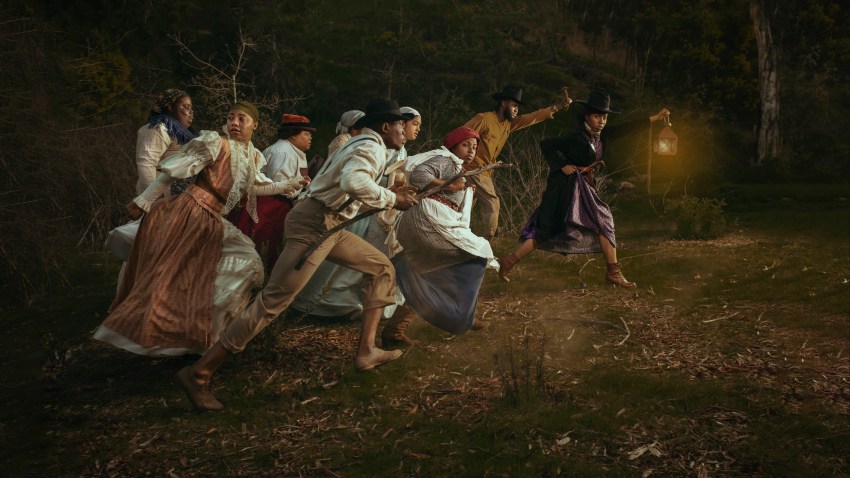
The Journey Of A Slave

Abolitionist Harriet Tubman, Underground Railroad 'Brought to Life' in  Viral Photoshoot – NBC 7 San Diego

 My name is Harriet Tubman, born in Maryland to my momma, Harriet, and my daddy, Ben. Me and my 8 brothers and sisters were all born into slavery, for my parents were slaves. 3 of my sisters were sold to other plantations, so we all got split up. I was beaten so badly in those plantations that I got scars that will last for the rest of my life. I can recall a specific time where I was hit 5 times before breakfast was ever served. Another time, I saw another slave who was on the run. My owner told me to chase after him, but when I refused, he threw a two-pound weight at my head. I still have severe headaches and suffer from narcolepsy because of it. I ended up having to have brain surgery later in life, because I couldn’t handle the pain.  

          Can you imagine the fear I lived every day when I woke up? I did not know if I would make it to the next day, or if I would be separated from my family. I lived in constant fright that my family would be hurt. I married John Tubman in 1844, but he didn’t want to join me in the Underground Railroad, and left me for another woman. I later married Nelson Davis and adopted my baby girl, Gertie.

         In 1849, I planned to escape to Philadelphia though this thing you may have heard about called the Underground Railroad.  Two of my brothers were supposed to come with me, but a $300 reward was put out for our return.I didn’t want to go back, and they were scared, so I timidly let them go back. I had to travel around 90 miles all by myself and “When I found I had crossed that line, I looked at my hands to see if I was the same person. There was such a glory over everything; the sun came like gold through the trees, and over the fields, and I felt like I was in Heaven.” My goal was to save my family and any others left to be enslaved for the rest of their lives. I made 19 trips from the South to the North and helped over 300 people escape to freedom. Of course, like everything else in my life, it was hard. The Fugitive Slave Law was passed, which told everyone to return runaway slaves if they saw them, and thus I had to reroute the journey to Canada. 

       I spent a good portion of my life fighting for those who couldn’t fight for themselves. They lived in fear of not knowing what their future would be like. They didn’t want to have kids out of fear of their lives turning out the same. I fought for those who were abused, mentally and physically, and felt like their life was forever going to be a living hell. I pray that none of you ever have to experience what I have, because it truly does change a person, for the worst. 
The Underground Railroad | American Experience | Official Site | PBS


Friday, September 11, 2020

Christianity: Pro or Anti Slavery?


Slavery has been a big topic of discussion in Christianity for many years now. On one hand, the bible asserts statements that seem to condone slavery, but on the other hand, there were plenty of abolitionist Christians fighting for slave rights. Christianity, in historical and recent times, has been incognizant about whether slavery is supported in their theology or not. 

            The concept of condoning slavery has been very prevalent in Christian theology. For example, Christians heavily support the bible and all its interpretations, but Ephesians 6:5 states “Slaves, obey your earthly masters with respect and fear, and with sincerity of heart, just as you would obey Christ”. Also, when asked about pro-slavery thoughts in Christian theology, Frederick Douglass states “I love the pure, peaceable, and impartial Christianity of Christ; I therefore hate the corrupt, slave-holding, women-whipping, cradle-plundering, partial and hypocritical Christianity of this land”. He recalls the horrors that he has experienced throughout the religion, and even goes so far as to call it “bad, corrupt, and wicked”. 

Those who had slaves would say that they were saving the Africans from their “savage-like ways”, and were infusing them with Christian theology to control them. Christian slaveholders said that they treated their slaves kindly, and they thought that they were saving the slaves from a religion that “worshiped the devil, practiced witchcraft, and sorcery”. Many believed that giving slaves the freedom to practice would cause them to assume that they should be set free, especially after Nat Turner’s rebellion. Evidently, there are many affirmations that Christianity explicitly, and even implicitly, condones slavery.

Religious leaders and religion in the north played a significant role in condemning slavery. Although Southern ministers and churches were still pro-slavery, Northern ministers actually played a large role in the anti-slavery or abolitionist movement. In order to gain followers for the abolitionist movement in a time where the south and parts of the north depended heavily on slavery, the abolitionists described slavery as an “evil, un-Christian system” and “a stain on the values of the Declaration of Independence”. 

Many leading Abolitionists were guided by their religious beliefs. During a time known as the Second Great Awakening religious leaders told their congregations that they could achieve salvation by “building lives of morality” and “speaking out against sin”. Since slavery was considered one of the most sinful practices, the abolitionists attacked the movement with even more passion and people than ever before. Without the help of Northern ministers and churches, the abolitionist movement could have ended before it even began. People trusted their religious leaders and therefore the movement grew immensely when religion became a part of the argument against slavery.

Christianity has both condemned and condoned slavery at one point. You could argue either side in this case but ultimately it depends on how you interpret the bible. Religious leaders preached their interpretations of the bible whether it was pro or anti slavery.

Plessy Dissent

     Justice Harlan writes about his side, or the losing side, of the argument in hopes of convincing others in the board how poor their dec...